
Data hall and rooms
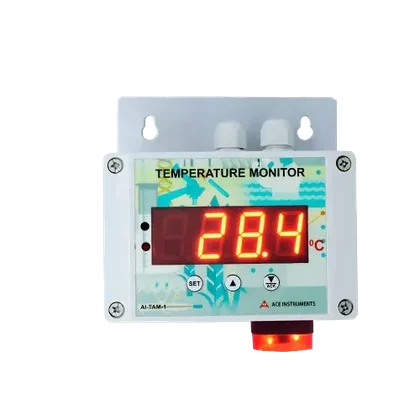
Temperature monitoring from the server room to the power rooms.
Multi-parameter monitors for LEED, WELL and GRIHA projects
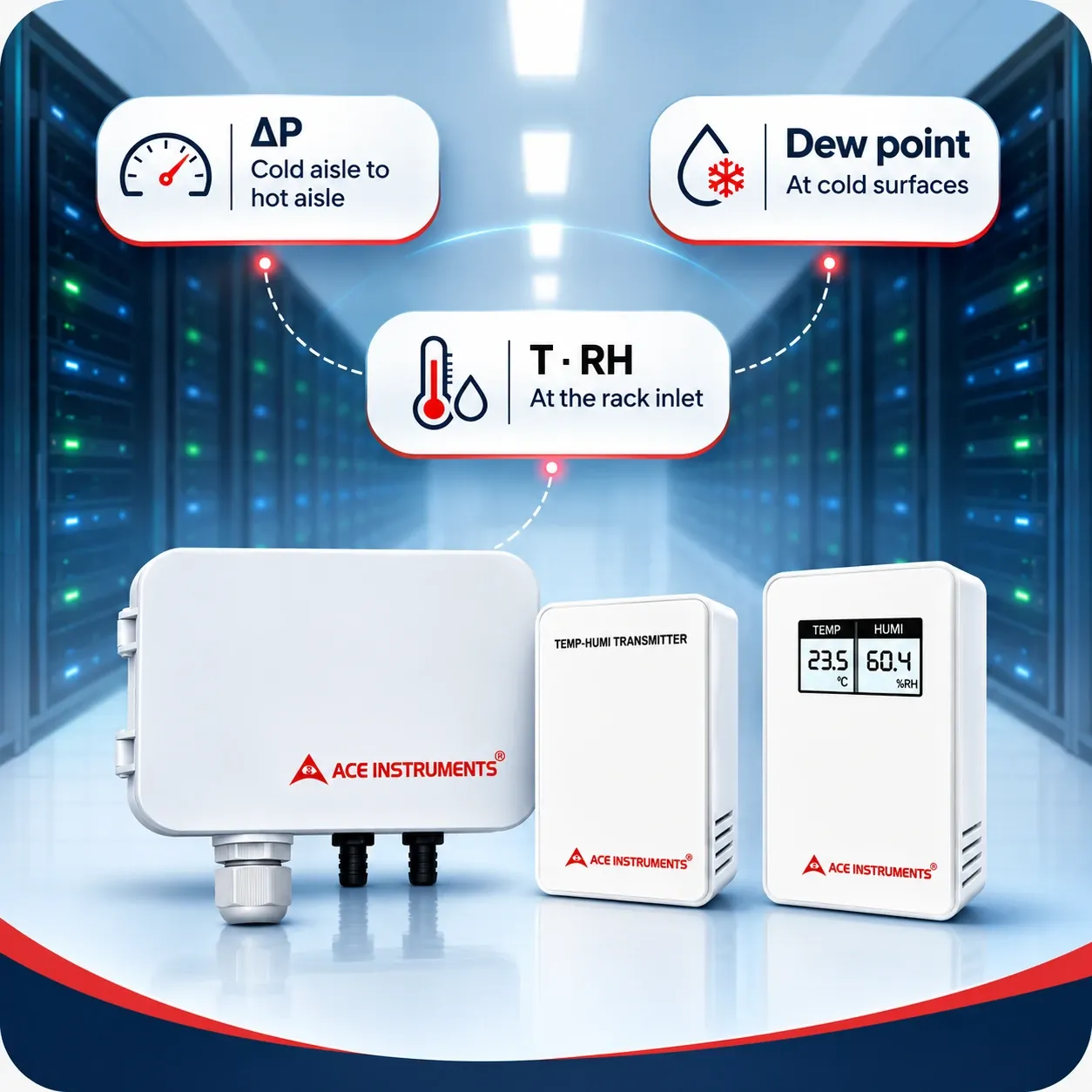
Hot aisle and cold aisle containment only works while the pressure between the aisles holds and the air reaching the racks stays in range. IAQ Detectors pressure, temperature and humidity instruments watch both, and report to your BMS or DCIM before a leak becomes a hot spot.
CE certified · ISO 9001:2015 · Designed and made in Hyderabad
A cross-section of a cold aisle containment hall and the chilled water plant that feeds it. Cold air rises through the perforated tiles, crosses the racks and returns hot to the CRAC, while chilled water circulates between the CRAC coils and the chiller. Select a point to see what sits there and why.
Pressure, air and water fail in different ways and show up in different places. One tells you the containment is working, one tells you what is reaching the equipment, and one tells you the cooling loop is carrying the heat away.
Starting points only. Confirm the final figures with your containment supplier, cooling designer and the equipment makers.
Guidance on the right containment differential varies between suppliers. Treat the pressure figure as a conversation with your designer, then use the transmitter to prove it holds.
From the server room to the generator yard, these are the instruments we supply for data centers. Select a model to open its product page.
Temperature monitoring from the server room to the power rooms.
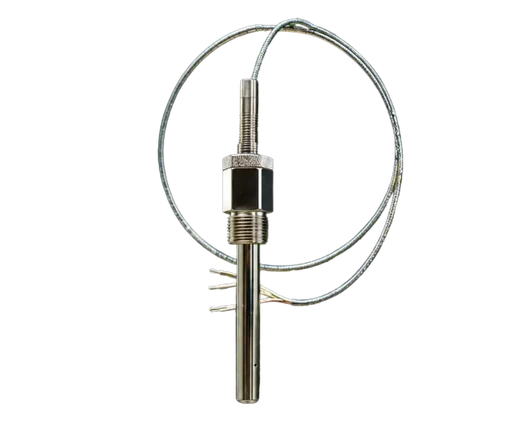
Water side temperature for the chilled water and liquid cooling loops.
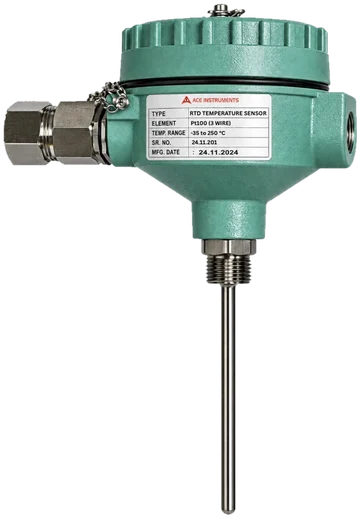
Flameproof RTDs for the diesel generator yard.
Three common starting points. Every site is different, so our application engineers tailor the list to your layout.
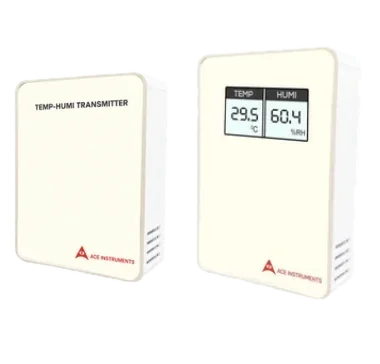
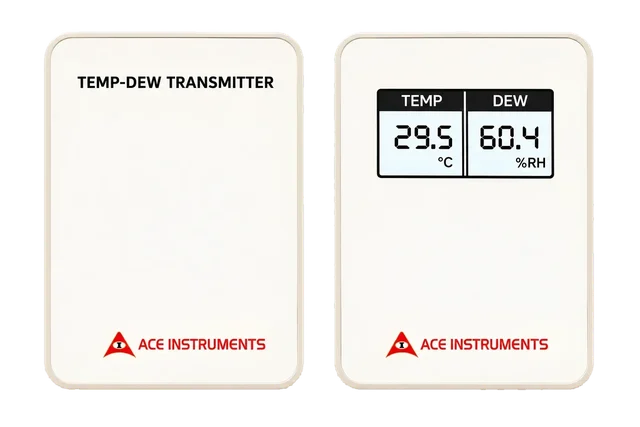
An independent temperature alarm with a remote alarm output, a room T/RH transmitter at the rack inlet, and a duct T/RH monitor on the cooling unit supply air.
Differential pressure across each contained aisle, plenum static pressure under the floor, T/RH at the rack inlet and dew point at the containment panels and AI-TAM-1 temperature monitors in the hot and cold aisles.
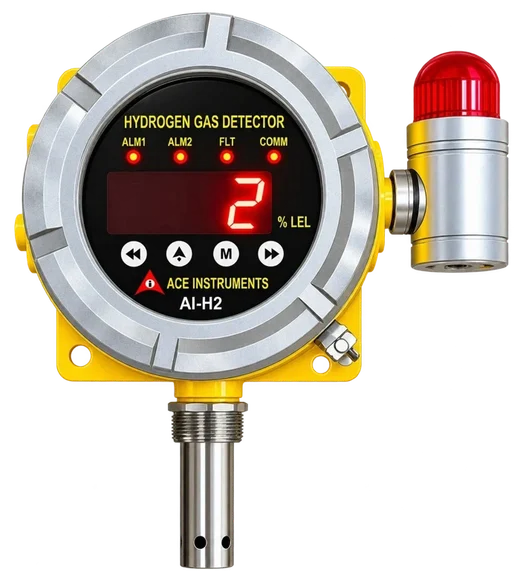
The contained hall list repeated per aisle, with CRAC supply T/RH, chilled water supply and return temperature, particulates for free cooling and hydrogen detection in the UPS battery room, and flameproof RTDs on the generator fuel and exhaust lines.
Designed and manufactured by Ace Instruments in Hyderabad, with 4–20 mA, 0–10 V or RS-485 Modbus RTU outputs depending on model.
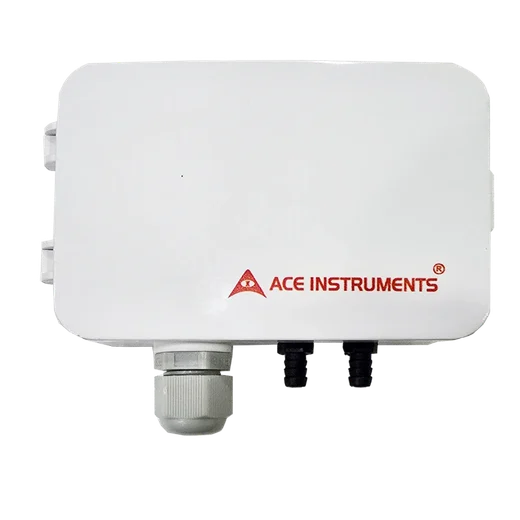
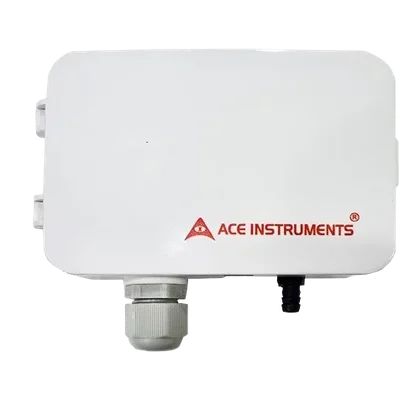

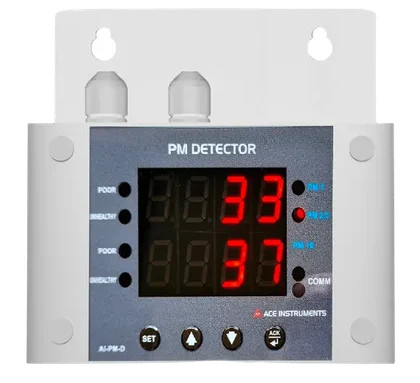
Containment only works while the pressure relationship between the two aisles holds. A drop in the expected differential points to an open door, a damaged seal or a missing blanking panel, often before the rack inlet temperature moves. A transmitter with a fast response also catches short events that a slow sensor would smooth away.
It is the air pressure beneath the raised floor that pushes cooling air up through the perforated tiles into the cold aisle. If plenum pressure falls, airflow to the racks falls with it, even while the CRAC or CRAH fans appear to be running normally.
At the server inlet in the cold aisle, because that is the point the ASHRAE thermal guidelines apply to. Add a sensor in the CRAC or CRAH supply air to see what the cooling plant delivers, and a dew point sensor near cold surfaces such as containment panels and chilled water pipes.
Relative humidity changes with temperature, so the same percentage can mean very different moisture content. Dew point is the temperature at which condensation begins, so comparing it with the surface temperature of a panel or pipe shows the real condensation risk. The AI-DEW-TRH reports dew point, temperature and humidity from one unit.
There is no single figure. Operators hold anything from close to zero to about 20 Pa between the cold and hot sides, depending on the containment design and how the cooling fans are controlled. Set the target with your containment supplier and cooling designer, then use the transmitter to confirm it holds.
The difference between supply and return temperature shows how much heat the loop is carrying away from the hall. An immersion sensor in a thermowell on each line lets you trend both and catch a failing chiller, pump or coil early. The thermowell also lets you service the sensor without draining the pipe.
Flameproof RTD Pt-100 sensors measure the DG set fuel day tank temperature and the DG exhaust and coolant temperature. The exhaust and coolant version is available with an optional −100 to +300 °C range.
Yes. Outputs are 4–20 mA, 0–10 V or RS-485 Modbus RTU depending on model, so they connect to most building management systems, DCIM platforms and PLCs. Confirm the output option for your model with our application engineers when you order.
Ace Instruments has designed and built IAQ Detectors instruments in Hyderabad since 1991, with more than 1,000 installations worldwide. Every unit is CE certified and made under an ISO 9001:2015 quality system. Send us your aisle layout and we will list the points to monitor.
