
Carbon Dioxide Monitoring: What You Need to Know to Improve Indoor Air Quality
Carbon Dioxide (CO2) is one of the most important metrics in indoor environments where people work or live.

Carbon Dioxide Monitoring: What You Need to Know to Improve Indoor Air Quality
What Does CO2 Monitoring Mean for Indoor Air Quality?
Carbon Dioxide (CO2) is one of the most important metrics in indoor environments where people work or live. CO2 levels are simply the amount of carbon dioxide present in the air. As people breathe, they take in oxygen and emit carbon dioxide. In an occupied room, exhaled CO2 builds up unless ventilation keeps pace, which is why accurate CO2 measurement is one of the most practical indicators of whether a space is getting enough fresh air.
For example, high carbon dioxide levels will result in tired occupants with lower productivity.
Low CO2 is not a health concern indoors. Indoor levels cannot realistically fall below the outdoor baseline of around 420 ppm, so a reading close to outdoor levels simply shows that the space is well ventilated. The risk runs in one direction: as CO2 rises, occupants report drowsiness, headaches and poorer concentration, which can lead to reduced motivation and loss of productivity.
Continuous Carbon Dioxide Monitoring for Indoor Air Quality
High-accuracy carbon dioxide (CO2) monitoring is essential for early detection, control and correction of indoor CO2 levels. With continuous measurement, it is possible to identify trends and address issues immediately.
Continuous CO2 monitoring also provides real-time trend data for better decision-making. CO2 measurement instruments are available as portable and wall-mounted devices. Portable CO2 meters can be carried from location to location to measure CO2 levels in specific areas. Wall-mounted CO2 monitors are typically installed in high-traffic areas.
CO2 is typically measured in parts per million (ppm). As a rule of thumb, CO2 levels less than 1000 ppm are considered acceptable for indoor air quality. CO2 levels between 1000 ppm and 2000 ppm are considered moderately high while levels above 2000 ppm are high enough to cause a significant impact on indoor air quality.
Monitoring CO2 across environments: cold storages, greenhouses, offices and educational institutions
Cold storages and refrigeration plants - Cold storages and refrigeration plants are the areas where carbon dioxide is critical for detection to ensure personnel safety in CO2 refrigerated facilities and product storage life.
Greenhouses - Greenhouses are areas where CO2 needs to be tightly controlled. Growers commonly enrich CO2 above outdoor levels, often to around 800 to 1,200 ppm, because plants use CO2 for photosynthesis and higher levels can improve growth and yield. Continuous monitoring keeps enrichment within the target band and protects staff working inside.
Offices and educational institutions - CO2 monitoring is recommended in offices and educational institutions. This is mainly because of the high number of people and various activities in these areas. Continuous CO2 monitoring helps confirm that levels stay below 1,000 ppm during occupied hours and flags spikes above 2,000 ppm as soon as they happen.
Tips to Improve Indoor Air Quality and Lower CO2
- Increase outdoor air ventilation: CO2 is only removed by diluting indoor air with outdoor air, so check that outdoor air dampers and fresh air rates meet the ventilation design, especially in densely occupied rooms.
- Use demand controlled ventilation: linking CO2 readings to the HVAC or BMS lets fresh air supply rise and fall with occupancy, keeping CO2 in range without over-ventilating empty spaces.
- Open windows: Opening windows can help bring in fresh air and reduce CO2 levels. This can be attributed to the fact that fresh air contains less CO2.
- Maintain filters, but do not rely on them for CO2: air filters remove particulates, not CO2. Keeping them clean protects airflow, but ventilation is what actually lowers CO2.
Ace Instruments’ Carbon Dioxide Monitoring Range
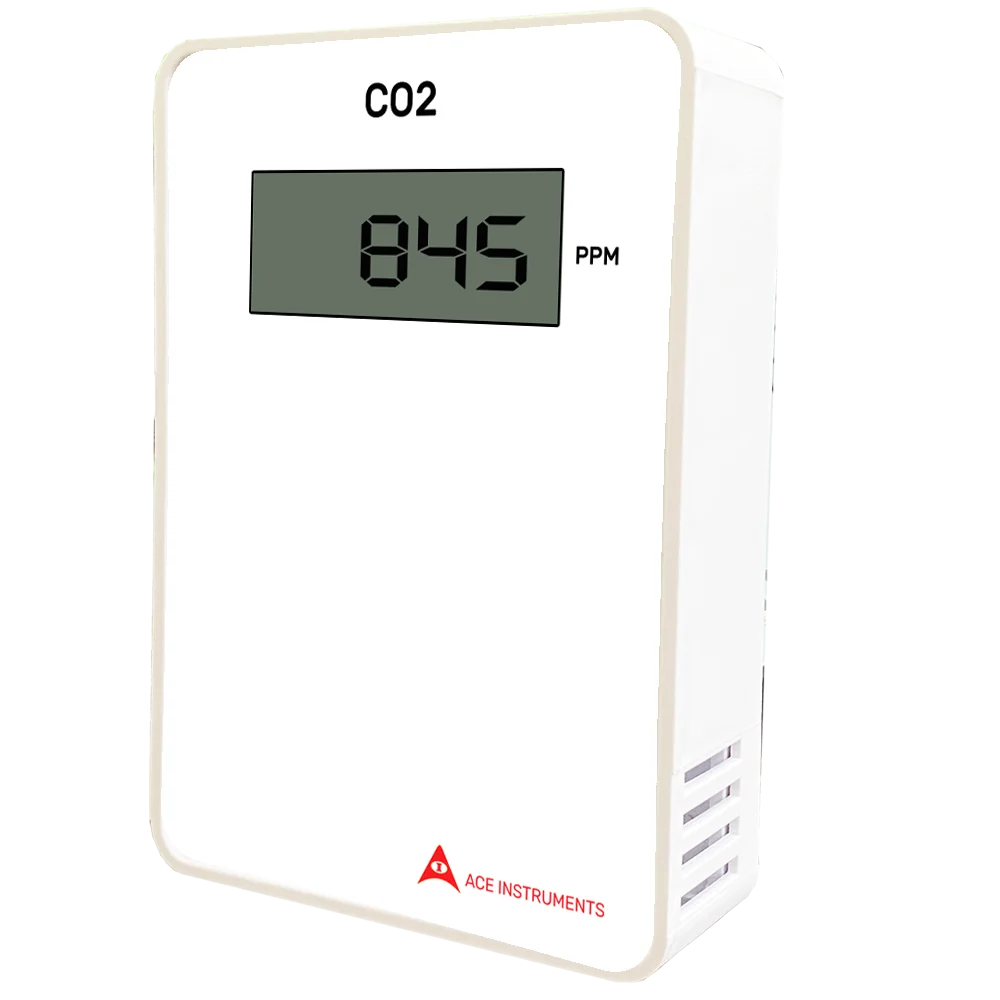
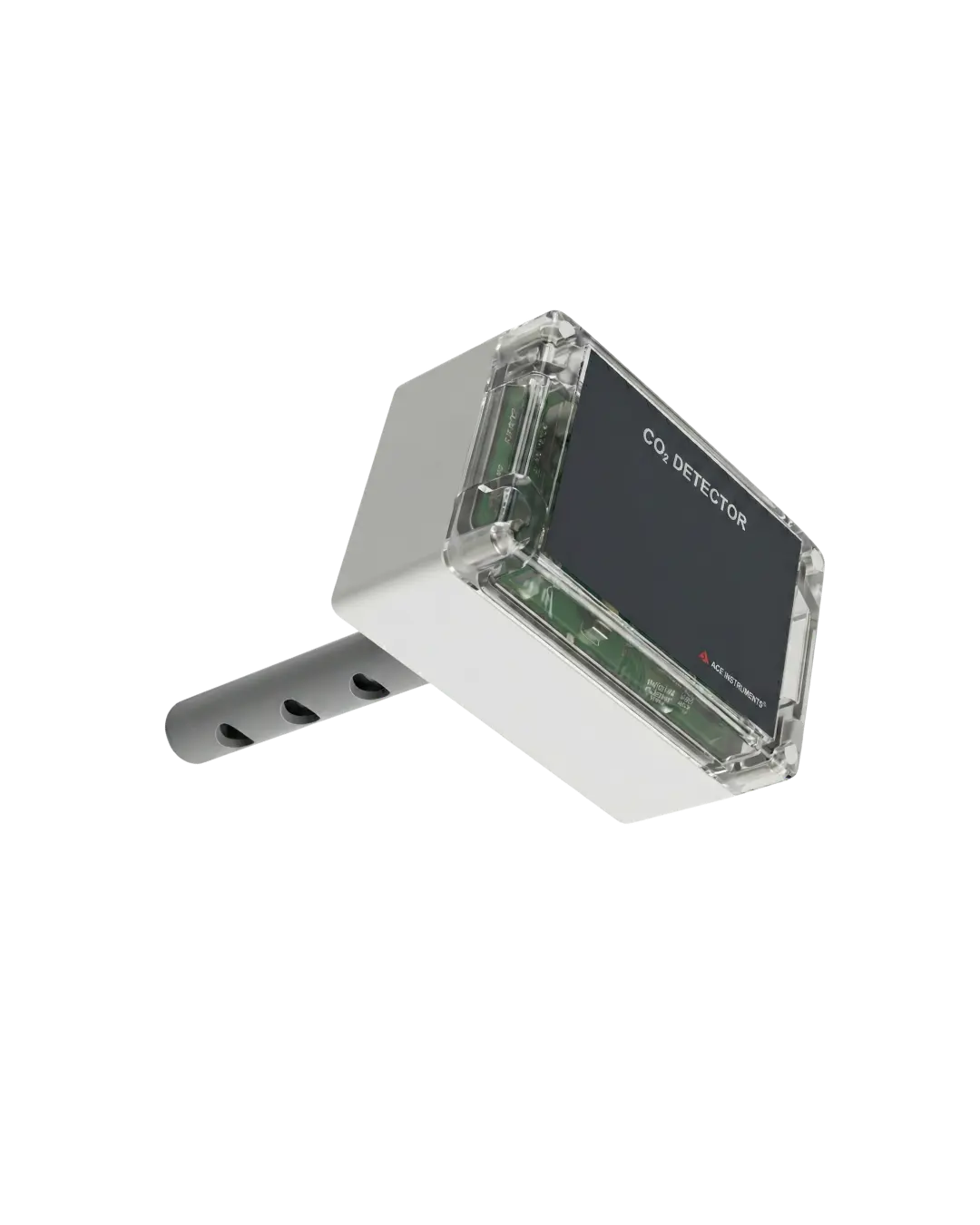
Carbon dioxide is an important metric to be monitored when assessing indoor air quality. High levels of CO2 have been correlated to reduced productivity and health effects, including headaches and nausea. Continuous CO2 monitoring in indoor air environments across applications can improve ventilation levels, productivity and ensure detection of rapid level changes for appropriate interventions. The Ace Instruments’ carbon dioxide monitors are available as wall-mounting transmitters with/without display and also with duct mounting options. The carbon dioxide monitoring range leverages Swiss photoacoustic sensors to deliver the latest advancements in sensing technology to users and enabling accurate tracking of carbon dioxide levels.
Know the latest trends in IAQ solutions from the Ace Instruments team





Instruments that exceed your technical expectations
Comprehensive and customized IAQ solutions for all applications

