
PM1.0, PM2.5 and PM10 Meaning Explained
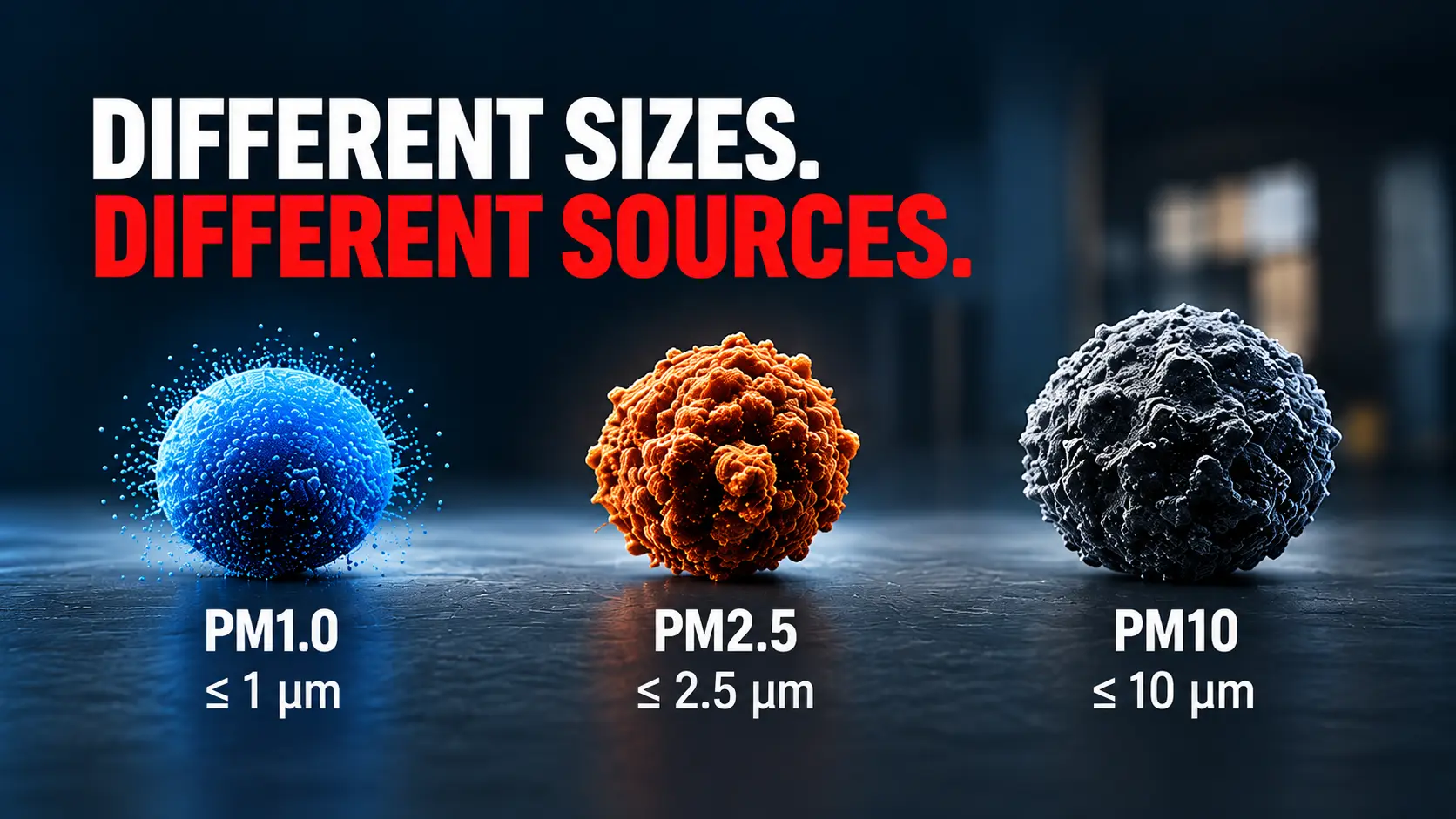
PM1.0, PM2.5 and PM10 refer to particulate matter classified by aerodynamic diameter in micrometres - PM1.0 captures particles up to 1 micrometre, PM2.5 up to 2.5 micrometres, and PM10 up to 10 micrometres. The smaller the number, the deeper the particle can penetrate into the respiratory system.
PM1.0, PM2.5 and PM10 Compared
DesignationMaximum diameterCommon sourcesHealth relevancePM1.0≤1 µmCombustion, vehicle exhaustDeepest lung penetration, reaches alveoliPM2.5≤2.5 µmCombustion, smoke, secondary aerosolsAlveolar deposition, most studied health metricPM10≤10 µmDust, pollen, construction activityUpper respiratory tract deposition
Why PM2.5 and PM10 Are Measured Together
PM2.5 and PM10 are measured together because they indicate different pollution sources and different health pathways: a space with high PM10 but normal PM2.5 often points to coarse dust from construction or foot traffic, while elevated PM2.5 with normal PM10 more often points to combustion sources or secondary aerosol formation, information that is lost if only a single combined particulate reading is taken.
A duct or room-mounted instrument that reports PM2.5, PM10 and, where fitted, PM1.0 separately gives a facilities team enough information to distinguish a filtration problem from a combustion-related event, which a single combined particulate reading cannot do.
WHO 2021 Air Quality Guideline Levels
ParameterAnnual mean24-hour meanPM2.55 µg/m³15 µg/m³PM1015 µg/m³45 µg/m³WELL Standard v2 PM2.5 (occupied) <35 µg/m³
Why Ace Instruments
Ace Instruments has manufactured air quality and environmental monitoring instruments from its 10,000 sq.ft Hyderabad facility since 1991, with more than 1,000 installations worldwide. Every IAQ Detectors instrument referenced in this article is CE certified and produced under an ISO 9001:2015 quality system.
FAQ
Q: What does PM2.5 mean?
PM2.5 means particulate matter with an aerodynamic diameter of 2.5 micrometres or smaller, small enough to deposit deep in the alveoli of the lungs.
Q: What does PM10 mean?
PM10 means particulate matter with an aerodynamic diameter of 10 micrometres or smaller, which deposits mainly in the upper respiratory tract.
Q: What is the difference between PM1.0, PM2.5 and PM10?
The difference between PM1.0, PM2.5 and PM10 is particle size: PM1.0 captures only particles up to 1 micrometre, PM2.5 up to 2.5 micrometres, and PM10 up to 10 micrometres, with smaller particles penetrating deeper into the respiratory system.
Q: What is a safe PM2.5 level indoors?
A safe PM2.5 level indoors is below 5 µg/m³ annual mean and 15 µg/m³ 24-hour mean per WHO 2021 Air Quality Guidelines, with WELL Standard v2 allowing up to 35 µg/m³ in occupied spaces.
Know the latest trends in IAQ solutions from the Ace Instruments team


Get inspired and learn more
Instruments that exceed your technical expectations
Comprehensive and customized IAQ solutions for all applications

